Melonity is the broader-looking product on paper: its Deadlock page advertises more than 100 functions, visuals, aim assistance, auto parry and automated items, while its public changelog shows continuing hero and dodger work. Cluster is the better choice for a buyer who wants a tighter, easier-to-read Deadlock offer built around aim, ESP, souls, parry, hero combos and FOV controls.
| Criteria | Cluster | Melonity |
|---|---|---|
| Best fit | Deadlock-first buyers who want a readable feature map | Players who want a broad cross-game script suite |
| Public breadth | Focused aim, ESP, souls, parry, combos and FOV categories | 100+ functions, visuals, aim, auto parry, auto items and dated updates |
| 30-day snapshot | $10 on the checked Cluster page | $14.29 on the checked Melonity page |
Want the clearer Deadlock setup? Cluster puts aim, ESP, hero tools and automation behind a focused interface. See Cluster for Deadlock.
Editorial disclosure: deadlockhacks.com has a commercial preference for Cluster. We did not buy or independently run either product. This is a dated comparison of public pages, screenshots and update notes, not a private benchmark.
Quick verdict
- Best focused pick: Cluster.
- Best documented breadth: Melonity.
- Price snapshot: Cluster's public page shows a $5 starting label; Melonity's current Deadlock page shows $8.79 for 7 days, $14.29 for 30 days and $35.19 for 90 days.
- Freshness snapshot: Melonity exposes dated Deadlock changelog entries, including an August 20 update with a new Dodger script and an August 14 update with new hero combos. Cluster's product page is clearer but has no matching public dated Deadlock diary in the same check.
- Important limit: neither changelog nor security badge proves account safety or future compatibility.
The core difference: focused product versus broad suite
Cluster's Deadlock page is written like a focused product card. It lists configurable aim assistance, ESP, Hero Combo, Auto Parry, Anti Parry, Souls Aimbot, Humanizer and FOV Changer, plus Windows 10/11 requirements and a support route. The list answers the common buyer questions quickly.
Melonity's page is more ambitious. It advertises 100+ functions and groups them into Visuals, Aimbot, Auto parry and Auto items. It also describes map activity, souls and power-ups, plus configurable automation for defensive item use. Its changelog adds further context: update notes mention a Dodger script, Auto Strafe, Sinner Helper, bug fixes and hero-specific combo work.
That breadth is useful if you want a large automation surface. It is also more to keep current. The more a product promises, the more important a dated changelog and a clear support path become.
Aim and ESP
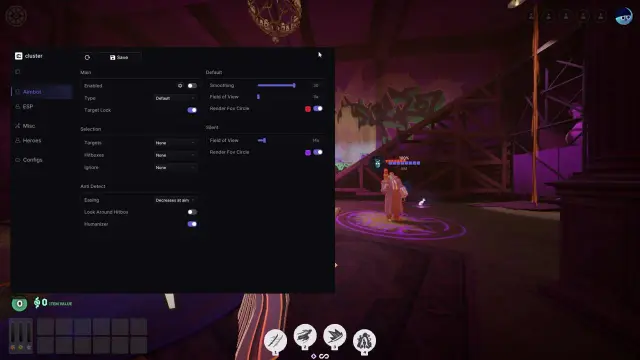
Interface edge: Cluster's menu keeps the important controls in a readable path from aim and ESP to hero tools. That tighter hierarchy makes a first config easier to understand than a wall of unrelated toggles.
Both products publicly present the familiar Deadlock core: aim assistance and visual information. Cluster's internal feature description gives the clearest high-level control vocabulary: players, XP orbs and creeps as target categories; FOV, smoothing, target lock and hitbox choices; ESP elements such as boxes, names, hero icons, health and glow.
Melonity's public page is less granular about individual aim controls, but it positions its visuals as a map-wide information layer and its aim as a matchmaking assistance module. That may be enough for a reader who wants a broad suite, but it is harder to compare setting-by-setting from the public page alone.
Edge: Cluster for transparent core controls; Melonity for the wider suite pitch.
Combos, auto items and parry
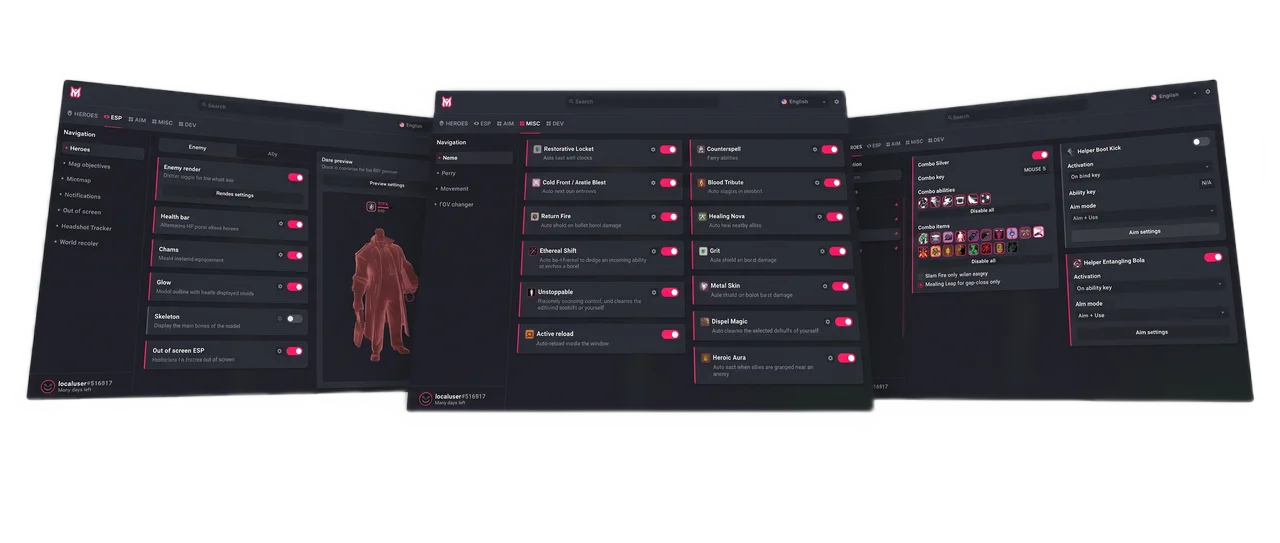
This is where Melonity makes its strongest case. The product page names automatic item use, auto-counterspell and auto-dispel concepts. The August changelog records new combos for multiple heroes and changes to ability logic, along with a fix for auto-parry logic in a later update. Those dated notes are valuable because they show ongoing maintenance work in public.
Cluster names Hero Combo, Auto Parry and Anti Parry as part of the core Deadlock offer. That gives it a cleaner short list, but not the same public hero-by-hero change detail as Melonity's changelog.
If you specifically want the broadest publicly described automation, Melonity deserves credit. If you want to understand the product quickly and keep the feature surface focused, Cluster is easier to evaluate.
Price and trial terms
The current Melonity Deadlock page lists:
- 7 days — $8.79;
- 30 days — $14.29;
- 90 days — $35.19;
- a 7-day trial for eligible new accounts, according to the vendor page.
Cluster's page shows a $5 starting label with selectable durations. Because the duration selector and checkout currency matter, treat that as an entry signal rather than a final quote.
On the visible monthly headline, Cluster is cheaper. Melonity offers a more explicit tier list, which is useful for planning a longer subscription. Verify the final entitlement, trial eligibility and refund terms on the live pages before publishing a commercial price card.
Freshness and support evidence
Melonity leads on public update detail. The visible Deadlock changelog includes an August 20 update covering Dodger, Auto Strafe, Sinner Helper and fixes, plus an August 14 update covering combos for multiple heroes. The September evidence snapshot also recorded a newer Melonity update note dated 2 September 2026, with concrete changes; recheck the live changelog because these dates can move.
Cluster exposes a readable product page, Windows requirements and Telegram support, but no recent public Deadlock changelog was found in the same snapshot. That is a transparency gap in the public trail, not proof of missing maintenance.
Final verdict
Melonity is the stronger choice for a reader who values a broad Deadlock suite and wants to follow dated hero/combo updates. Cluster is the better recommendation for deadlockhacks.com's focused buyer: its page is easier to scan, its core categories line up with the most common Deadlock comparison questions, and its advertised entry price is lower.
The clean verdict is not “Melonity is bad.” It is: Melonity sells breadth; Cluster sells a clearer decision. For most readers landing on a comparison page, that clarity is why Cluster wins. Neither product should be described as guaranteed safe or permanently compatible.
FAQ
Is Cluster better than Melonity for Deadlock?
Cluster is the better fit for a focused, easy-to-scan Deadlock product. Melonity is stronger if you specifically want a broader suite and more detailed public hero/combo updates.
What does Melonity offer for Deadlock?
Its public page lists visuals, aim assistance, auto parry and automated items, while its changelog documents newer dodger and hero-combo work.
How much is Melonity Deadlock?
The current page shows $8.79 for 7 days, $14.29 for 30 days and $35.19 for 90 days. Prices and trial terms are date-sensitive.
Does a changelog prove that Melonity works after every patch?
No. It proves what the vendor says changed on a given date. Recheck compatibility and support after a major game update.
Why does Cluster win if Melonity has more features?
Because this page weights clarity and focused Deadlock fit, not raw feature count. Cluster answers the core comparison questions with less product sprawl.
For the current Cluster offer, visit the official Cluster Deadlock page. This link is the only competitor/product link retained in this article; other provider URLs from the source notes were removed.