Short answer: Cluster is the better pick if you want a focused Deadlock product with a clearly presented aim/ESP stack, a visible support route and a lower advertised starting price. Predator is a cheaper-looking, more compact option, but its public feature and freshness trail is thinner. That is a documentation verdict, not a claim that either product is safe or currently compatible after every patch.
| Criteria | Cluster | Predator |
|---|---|---|
| Deadlock focus | Dedicated product with aim, ESP, souls, parry and hero tools | Multi-game product with conventional aim and ESP categories |
| Evidence clarity | Current product page, feature descriptions and support route | Menu captures and public listing, with a thinner freshness trail |
| Entry signal | $5 starting label; verify duration at checkout | $17 monthly figure in the supplied capture; verify currency |
Want the clearer Deadlock setup? Cluster puts aim, ESP, hero tools and automation behind a focused interface. See Cluster for Deadlock.
Editorial disclosure: deadlockhacks.com promotes Cluster. We did not buy, run, or detection-test either product. The conclusion below uses public vendor pages plus the Predator screenshots and short clips supplied for this article.
Quick verdict
- Best overall fit for Deadlock: Cluster.
- Why: its public Deadlock page names configurable aim assistance, ESP, hero combos, auto parry, soul assistance, FOV controls and a humanizer in one game-specific offer.
- Where Predator has a point: its menu is compact, its catalog exposes a Deadlock product, and the public catalog has historically shown a lower price than many premium competitors.
- Biggest unknown: neither public page proves live compatibility, account safety or future update quality. Do not read an “undetect” badge as a guarantee.
What we compared
The useful question is not “which menu has more toggles?” It is whether the product page lets you understand the actual Deadlock workflow before paying. I used five checks:
- Aim and target scope — are the controls described clearly enough to understand what the product is for?
- Visual information — does the evidence show a readable ESP layer rather than a generic badge?
- Deadlock-specific depth — are souls, parry timing, hero actions or camera controls addressed?
- Price and access clarity — can a reader identify the duration and final currency without guessing?
- Freshness and support — is there a dated update trail or a visible route for questions?
This keeps the comparison honest. A current product page is evidence that a vendor presents an offer; it is not an independent performance test.
Aim and ESP: Predator is basic, Cluster is broader
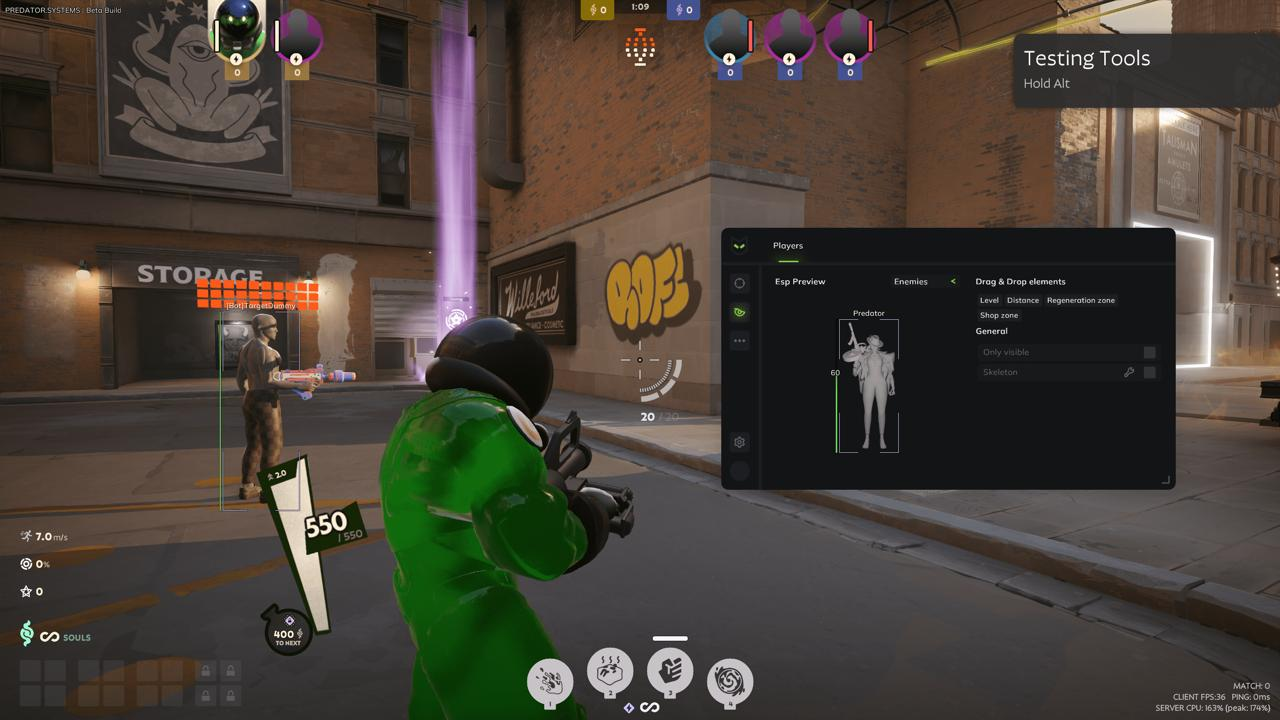
Predator's official Deadlock listing names Aimbot, ESP Preview, Map hack, Exploits and Spoofer. Its older public release note also listed FOV, smoothness, hitbox choice, distance, behind-the-wall targeting, souls and troopers, plus boxes, health, nickname, hero name, glow and a radar-style set of visuals. Those are vendor-listed categories, not features we independently verified.
The supplied Predator material makes the menu easier to judge than the marketing copy alone. One screenshot shows an Aimbot panel with FOV and Smooth controls and filters for souls and troopers. Another shows the Players/ESP Preview panel with a draggable preview. The four supplied clips are short demonstrations of that same general menu-and-overlay workflow. They are useful visual evidence of what was recorded; they do not establish uptime, latency, patch compatibility or detection outcomes.
Cluster's current Deadlock page is more explicit about the product shape: configurable aim assistance, ESP, Hero Combo, Auto Parry, Anti Parry, Souls Aimbot, Humanizer and FOV Changer. The separate internal feature description also documents target categories (players, XP orbs and creeps), hitboxes, FOV, smoothing and target lock at a high level. That gives Cluster the cleaner answer to “what would I actually be comparing?”
Edge: Cluster. Predator is not empty; it is simply less legible from the public trail.
Deadlock-specific utility is the real separator
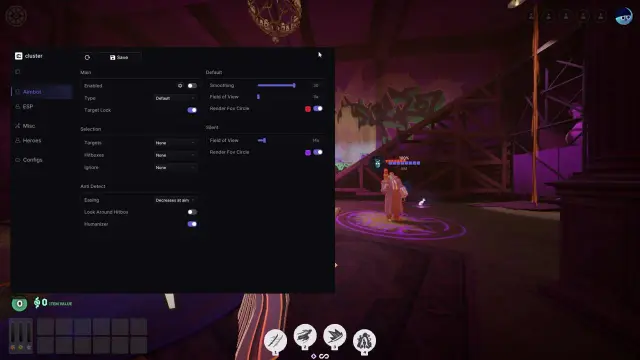
Interface edge: Cluster's menu keeps the important controls in a readable path from aim and ESP to hero tools. That tighter hierarchy makes a first config easier to understand than a wall of unrelated toggles.
Deadlock is not just a hitscan shooter. Souls, projectiles, melee parries and hero-specific actions make a generic “aim + boxes” menu a smaller proposition than a product that names those jobs directly.
- Cluster presents Souls Aimbot, Auto Parry, Anti Parry, Hero Combos and FOV controls as first-class parts of the product.
- Predator's public listing presents map hack, exploits and a spoofer, but its feature description is less detailed about how Deadlock-specific interactions are scoped today.
- Neither page gives enough current, reproducible information to promise that every hero, projectile or parry case works after the latest game update.
If your priority is a single narrow visual overlay, Predator may be enough on paper. If your priority is a coherent Deadlock feature set, Cluster is the more convincing fit.
Price: compare the checkout, not the headline
Cluster's public page currently shows a $5 starting label beside selectable durations. Predator's main catalog has shown $17 for one month for Deadlock, while its product page has also rendered a dynamic ₽699 selector in another access path. Those values are not a clean apples-to-apples quote until a duration, currency and final checkout total are selected.
That still leaves Cluster with the stronger price signal: its advertised entry is clear and low, while Predator's public pages require more interpretation. If the price is the deciding factor, verify the final total, entitlement length and refund terms before purchase; do not rely on a search snippet or an unselected widget.
Freshness and support
Predator's latest dated Deadlock note visible in the public evidence trail was 21 July 2026 and was brief. Automated access to the product page returned 403 during one check, although a normal browser loaded the listing. That does not prove the product is offline or abandoned; it means the buyer has less easy-to-audit freshness evidence.
Cluster's page is detailed and exposes a Telegram support route, Windows 10/11 requirements and a trial statement for eligible new accounts. The missing piece is a recent public Deadlock-specific changelog. In other words, Cluster wins clarity of the product page, while Predator has a dated forum trail but less detail.
Final verdict
Choose Cluster when you want the most understandable Deadlock comparison: the public page connects aim, ESP, souls, parry, hero actions and FOV in one focused product, and its advertised entry price is easier to parse. Choose Predator only if its compact menu and current checkout terms solve your exact need and you are comfortable carrying more uncertainty about freshness.
Neither product comes with a no-ban promise. Treat “humanizer,” “spoofer,” “VAC,” and “undetect” as vendor language, not a guarantee. A responsible buyer checks the current page, update date, support channel and final checkout again after a major Deadlock patch.
FAQ
Is Cluster better than Predator for Deadlock?
For this dated public-evidence comparison, yes: Cluster presents a broader and clearer Deadlock-specific feature set and a cleaner price signal. That is not an independent performance or safety guarantee.
What does Predator publicly list for Deadlock?
Its public listing names Aimbot, ESP Preview, map hack, exploits, spoofer and other functions. The supplied screenshots also show FOV, Smooth and soul/trooper filters.
How much does Predator cost?
The main public catalog has shown $17 for one month, while another product widget showed ₽699 without a selected duration. Verify the final checkout total before treating either number as current.
Are the Predator GIFs a real test?
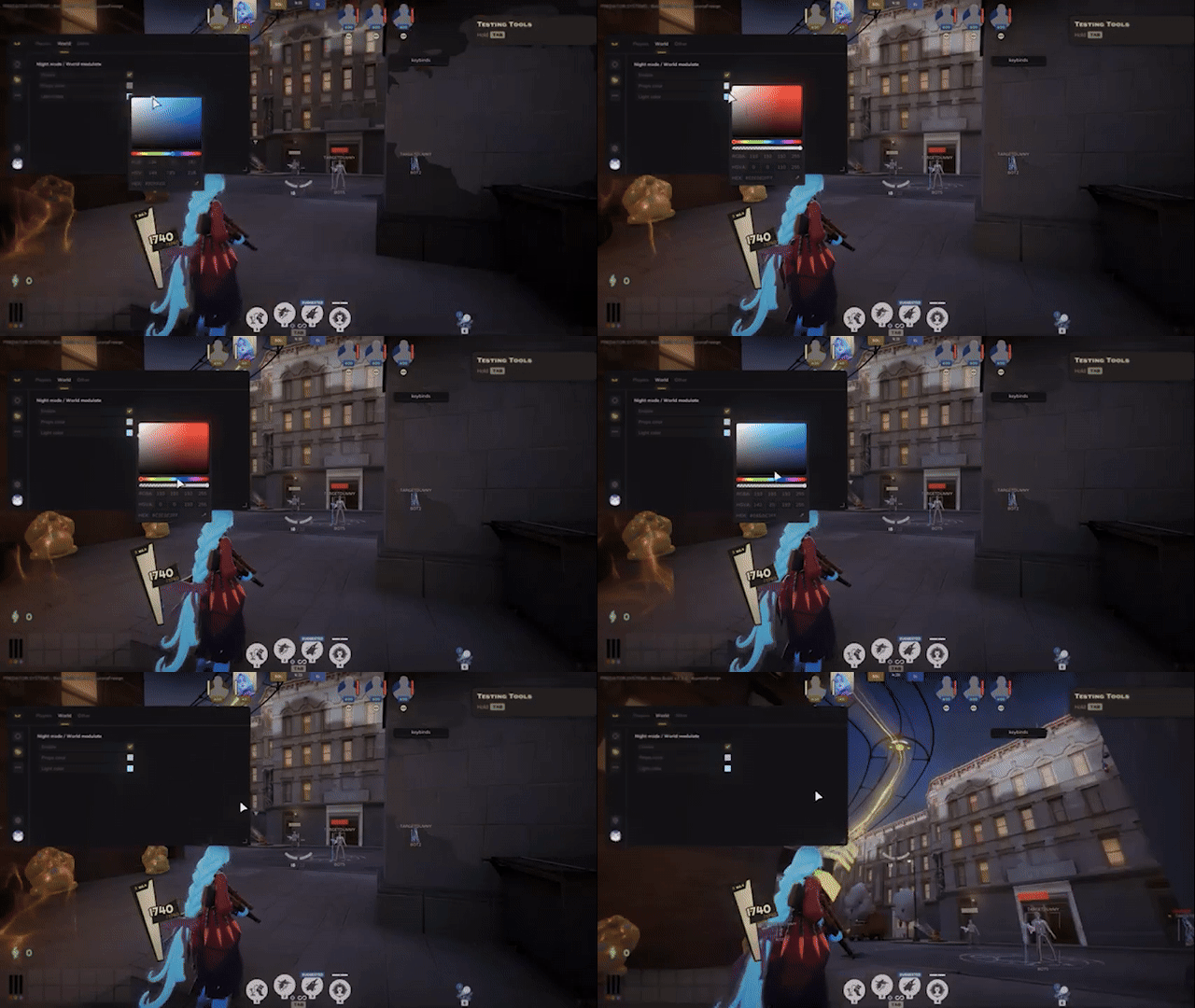
They are conversions of the supplied MP4 demonstrations. They show what was recorded, not uptime, patch compatibility, latency or detection results.
For the current Cluster offer, visit the official Cluster Deadlock page. This link is the only competitor/product link retained in this article; other provider URLs from the source notes were removed.